The Church Can't Be Healthier Than Its Leaders
Why Peter Scazzero's The Emotionally Healthy Church remains one of the most important books for pastors, ministry teams, and church leaders who want lasting transformation instead of surface-level growth.
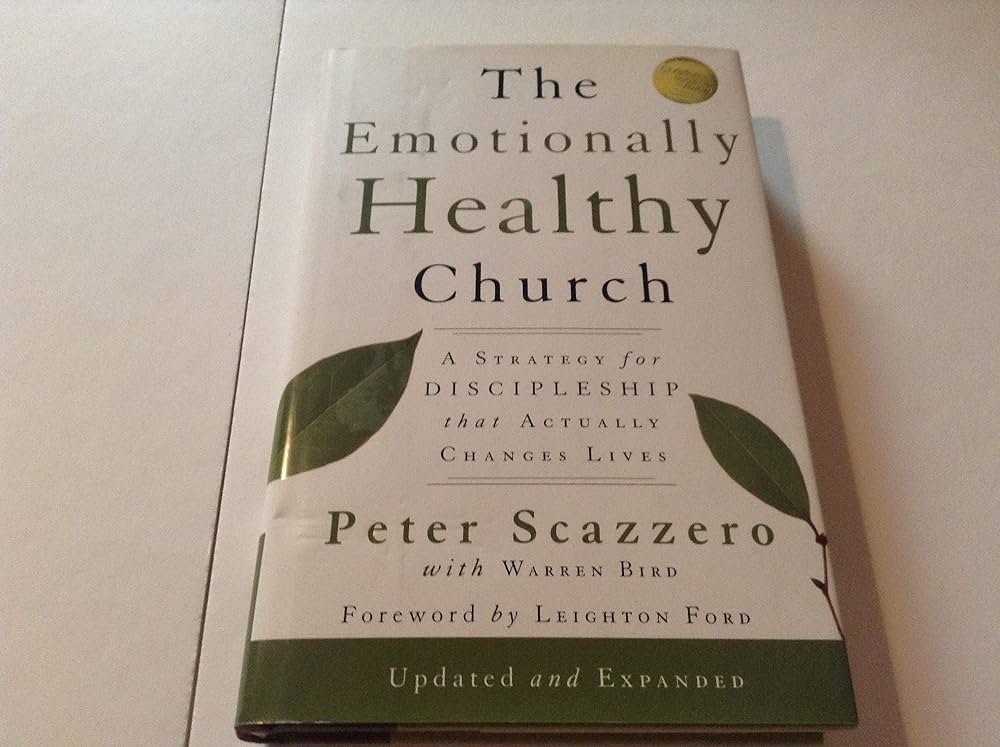
A church can be growing and still be unhealthy. It can have strong preaching, a full calendar, excellent music, growing attendance, expanding ministries, and a respected pastor while staff members are quietly burning out, unresolved conflict is spreading beneath the surface, marriages are strained by ministry pressure, and leaders are becoming increasingly defensive when anyone questions how things are being done.
That uncomfortable possibility sits at the center of Peter Scazzero's The Emotionally Healthy Church: A Strategy for Discipleship That Actually Changes Lives. The book is not particularly interested in helping churches become more impressive. Scazzero is asking whether the people inside the church, beginning with its leaders, are actually becoming more mature. That distinction is what makes the book so powerful.
The Big Idea: Spiritual Maturity Must Reach the Emotional Life
The central argument of the book is straightforward, but it challenges a lot of traditional church thinking: emotional health is part of discipleship. Scazzero argues that becoming spiritually mature should affect the way believers process pain, handle conflict, understand their limits, relate to family history, receive correction, grieve loss, and communicate with others.
That may sound obvious today, especially after years of conversations about pastoral burnout, therapy, trauma, boundaries, and mental health. But many church cultures have historically been much more comfortable talking about prayer, Bible study, service, fasting, and giving than anger, grief, shame, emotional wounds, family dysfunction, or the inability to say no.
The church has often known how to recognize obvious sin while overlooking emotional immaturity. A leader could preach powerfully while being unable to receive correction. A volunteer could serve constantly while becoming increasingly resentful. A pastor could lead a growing ministry while neglecting a spouse. Someone could quote Scripture about joy while refusing to acknowledge grief. A church could call itself loving while routinely avoiding difficult conversations.
Scazzero's argument is not that biblical disciplines are insufficient or unimportant. It is that those disciplines should produce transformation beneath the surface. Prayer should eventually affect how we respond under pressure. Scripture should shape the way we treat people. Leadership should become more humble, not more controlling. Spiritual growth should create greater self-awareness, not simply greater religious activity.
That is where the book becomes especially important for church leaders. A congregation can hide dysfunction for a season, especially when attendance is growing and the Sunday experience is strong. Eventually, however, emotional immaturity appears in staff turnover, volunteer exhaustion, unresolved conflict, poor boundaries, leadership isolation, toxic loyalty, or people quietly leaving because the church feels spiritually active but emotionally unsafe.
Look Beneath the Surface
One of the book's strongest principles is the challenge to look beneath visible behavior. Church culture often rewards appearances. Leaders know how to say they are blessed when they are exhausted. Staff members know how to smile in meetings while becoming increasingly frustrated. Pastors know how to stand before a congregation and preach hope even when they are carrying fear, anger, disappointment, or discouragement.
Scazzero pushes leaders to ask what is happening underneath those behaviors. Why does criticism make me so angry? Why do I need everyone to agree with me? Why do I feel guilty every time I rest? Why can I never say no? Why does another leader's success threaten me? Why do I avoid certain conversations until they become crises?
Those questions move leadership development away from technique and toward self-awareness. Churches frequently try to solve emotional problems with structural answers. A department is reorganized when the real problem is mistrust. A volunteer is removed when the deeper issue is unclear expectations. Another retreat is scheduled when staff members are actually afraid of the senior leader.
Looking beneath the surface means refusing to treat symptoms as the entire problem. It also means recognizing that a healthy church culture depends on leaders being willing to examine themselves before they diagnose everyone else.
A practical way to apply this principle is to expand the way leaders are evaluated. Churches often measure whether someone completed goals, managed a team, met attendance expectations, or executed programs. Those things matter, but leadership health should also include relational trust, communication, emotional consistency, conflict management, and the ability to receive feedback.
One of the most revealing questions a senior leader can ask is, 'What is it like to disagree with me?' Another is, 'Where does my leadership create unnecessary pressure for other people?' The answers may be uncomfortable, but healthy leadership is not built by protecting leaders from uncomfortable information.
Break the Power of the Past
Scazzero also challenges the assumption that conversion automatically erases a person's history. Every leader enters ministry carrying a family system, learned behaviors, cultural assumptions, coping mechanisms, emotional wounds, and patterns for dealing with stress and conflict.
Those patterns do not disappear simply because someone is gifted or called.
The most important growth in your church may not be another service, another campus, or another hundred people.
A leader who grew up in a home where conflict was explosive may avoid confrontation entirely. Someone raised around financial instability may become overly controlling with money. A pastor who learned early that performance earned love may build a ministry around constant productivity. A person raised in a highly authoritarian environment may recreate that same culture in church leadership while calling it honor or accountability.
This is one of the reasons the book feels transformational rather than simply motivational. It gives leaders permission to explore where their patterns came from without treating that exploration as a lack of faith.
Understanding the past does not mean blaming everything on childhood or refusing personal responsibility. It means recognizing that leaders bring their entire story into ministry, whether they acknowledge it or not. Unexamined history has a way of becoming organizational culture.
Churches can apply this wisdom by making self-awareness part of leadership development. Retreats and staff training should not focus only on strategic planning, productivity, and ministry goals. Leaders should also be encouraged to understand how family history, previous church experiences, fear, ambition, and unresolved wounds may influence the way they lead.
This is also where qualified counselors and therapists can become valuable partners to church leaders. Pastors do not need to become amateur psychologists. Sometimes the healthiest leadership decision is recognizing when deeper work requires professional support.
Vulnerability Without Losing Boundaries
Church leadership can create enormous pressure to appear permanently strong. Congregations want confidence from pastors. Staff members look to executives for stability. Teams want leaders to know what comes next, especially during difficult seasons. Over time, leaders can begin confusing responsibility with invulnerability.
Scazzero argues that emotionally healthy leadership includes brokenness and appropriate vulnerability. That does not mean pastors should turn the pulpit into a therapy session or publicly disclose every private struggle. Healthy vulnerability still requires boundaries. Leaders need private relationships and spaces where they can process without making the congregation responsible for carrying them.
What it does mean is that leaders stop pretending maturity requires them to always be right, always feel strong, or always have an answer. A pastor who can say, 'I was wrong,' creates a very different culture from a pastor who has to explain away every mistake. A supervisor who can say, 'I did not handle that conversation well,' teaches humility more effectively than another sermon on servant leadership.
People watch how leaders respond when they fail. Vulnerability makes repentance believable.
Churches that want to apply this principle should make apology normal. When communication fails, acknowledge it. When leadership makes a poor decision, correct it. When something creates unintended harm, do not hide behind good intentions. Healthy churches do not require leaders to be perfect. They require them to be honest.
It is also important for senior pastors to have relationships where they can be known beyond their titles. A leader can have thousands of people who admire them while having no one close enough to challenge them. That is not influence. That is isolation with an audience.
The Gift of Limits
Scazzero also addresses a temptation almost every driven leader faces: refusing to accept personal limits. Leaders can begin treating limits as spiritual weakness rather than as part of being human and finite. The book reframes limits as a gift rather than an obstacle. Saying no to a good opportunity in order to protect a healthy pace is not unfaithfulness. It can be wisdom.
Grief Is Not a Failure of Faith
Church culture can sometimes rush past grief in favor of quick declarations of victory. Scazzero insists that grief is part of a healthy spiritual life, not evidence of weak faith. Leaders and congregations that never learn to process loss honestly will eventually carry unprocessed grief into every future decision and relationship.
Learning to Love People Well
The book also connects emotional health directly to how leaders treat people. Impatience, control, favoritism, and conflict avoidance are not simply personality quirks. Scazzero treats them as discipleship issues. A church cannot claim to love people well while its leadership culture is marked by unresolved conflict or leaders who cannot be questioned.
Slow Down Enough to Lead With Integrity
Perhaps the most countercultural argument in the book is the call to slow down. Scazzero argues that emotionally healthy leadership requires margin. Leaders who never slow down eventually lose the self-awareness that healthy leadership requires. Rest is not a reward for finishing the work. It is part of doing the work faithfully.
Why This Book Is So Powerful for Church Leaders
What makes The Emotionally Healthy Church unusually durable is that it addresses causes rather than symptoms. Many leadership resources teach better systems, communication techniques, or strategic planning. Those tools matter, but they cannot fix an unhealthy leader. Scazzero's contribution is insisting that health has to begin internally before it can be sustained externally.
The book also normalizes conversations that many church cultures have historically avoided. Therapy, emotional woundedness, family dysfunction, grief, and personal limitation are treated as legitimate parts of discipleship rather than admissions of spiritual failure.
What the Book Gets Especially Right
The integration of emotional health and spiritual formation is the book's greatest strength. Scazzero does not treat emotional maturity as a secular add-on to faith. He treats it as inseparable from genuine discipleship. The practical structure of the book, moving from internal examination to external application, makes it usable for both personal reflection and church-wide culture change.
Where Some Readers May Push Back
Some readers from highly structured or more traditional church backgrounds may find the therapeutic language unfamiliar at first. The healthiest approach treats the book as a framework for spiritual and relational maturity, not a replacement for sound theology, biblical authority, or pastoral wisdom.
How to Apply the Book Without Creating Another Exhausting Program
Churches do not need an entirely new ministry department to begin applying these principles. Leaders can start by building self-awareness into existing rhythms: staff meetings, retreats, one-on-one mentoring, and personal reflection. Asking better questions, modeling honest vulnerability, and normalizing rest can shift culture without requiring a formal new initiative.
A Practical 90-Day Church Health Experiment
Churches wanting a concrete starting point could try a simple 90-day experiment. In the first month, leaders practice naming what they are actually feeling in staff meetings instead of only reporting tasks. In the second month, leaders practice receiving one piece of hard feedback without becoming defensive, and apologizing when they get something wrong. In the third month, leaders build in one protected block of rest each week and treat it as non-negotiable, not optional. Small, honest practices like these do more to change culture than another mission statement ever will.
Why This Belongs in the CP Magazine Leadership Book Club
The Emotionally Healthy Church remains one of the most important reads for any pastor, ministry leader, or church staff team serious about long-term health rather than short-term performance. It does not offer another growth formula. It offers a mirror, and eventually, the courage to look into it.
For more on how churches communicate identity and calling, read What We Like About Transformation
For a related look at church culture beneath the surface, read Your Church Already Has a Culture
The full book behind this review, covering discipleship, emotional maturity, boundaries, conflict, grief and leadership health in depth.
Scazzero's companion book focused on the individual's inner life and spiritual formation, a natural next read after The Emotionally Healthy Church.
Christianpreneur Magazine may earn a commission from qualifying purchases made through Amazon affiliate links at no additional cost to the reader.
Christianpreneur Magazine may earn a commission from qualifying purchases made through Amazon affiliate links at no additional cost to the reader.
More in Church Leaders
See all
Pastor of the Month: Rich Villodas of New Life Fellowship
The Brooklyn-born lead pastor of New Life Fellowship is helping churches rediscover a slower, deeper, more emotionally healthy way to follow Jesus.
Marcus Reed · 7 min
Three Church Leaders to Watch in 2026: Dharius Daniels, Corey Brooks and Philip Anthony Mitchell
Pastor Dharius Daniels, Pastor Corey Brooks and Philip Anthony Mitchell are leading in three very different ways, but each is forcing the church to think more seriously about transformation, community impact and discipleship.
Christianpreneur Staff · 14 min
This Church Helped Cancel $35M in Medical Debt
Transformation Church in South Carolina helped erase $34.9 million in medical debt for more than 17,500 people across the Carolinas. The story is a powerful example of what can happen when generosity, strategy and community partnership work together.
Rachel Thompson · 4 min