Three Church Leaders to Watch in 2026: Dharius Daniels, Corey Brooks and Philip Anthony Mitchell
Pastor Dharius Daniels, Pastor Corey Brooks and Philip Anthony Mitchell are leading in three very different ways, but each is forcing the church to think more seriously about transformation, community impact and discipleship.
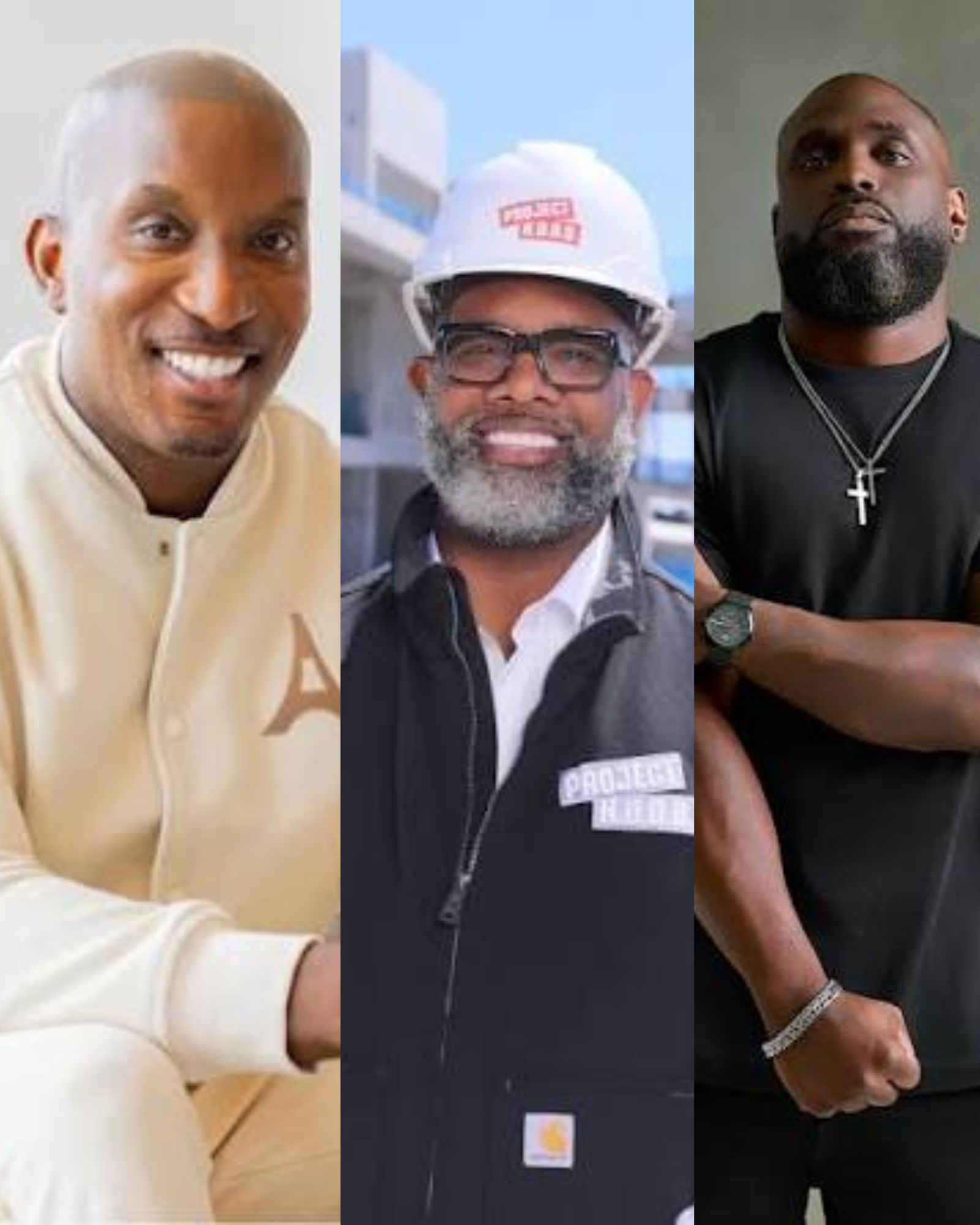
Every year, Christianpreneur Magazine's 'Top People to Watch' list is meant to do more than collect recognizable names. The goal is to pay attention to momentum, ideas and leadership that may tell us something about where the church is headed. Sometimes that means highlighting a pastor building a growing congregation. Other times it means looking at someone whose work is changing how churches think about leadership, community development, discipleship or ministry itself.
For 2026, three church figures stand out for very different reasons: Pastor Dharius Daniels of Change Church, Pastor Corey Brooks of New Beginnings Church and Project H.O.O.D., and Philip Anthony Mitchell of 2819 Church. None of them leads the same way, and their ministries could hardly be mistaken for one another. That is part of what makes them interesting.
Daniels represents a model of ministry that places personal transformation, emotional intelligence and leadership development at the center of the church's work. Brooks has spent years demonstrating what can happen when a church treats the neighborhood around it as part of its ministry responsibility, not merely as an audience for Sunday services. Mitchell is drawing extraordinary attention by emphasizing Scripture, prayer, repentance, discipleship and the Great Commission while attracting many of the younger adults churches have spent years trying to figure out how to reach.
They are not three versions of the same pastor. They are three leaders responding to different challenges facing the modern church.
Dharius Daniels: Transformation Has to Become More Than a Church Name
Pastor Dharius Daniels has spent much of his ministry talking about change, but what makes his work worth watching is the kind of change he is talking about.
Daniels is the founder and lead pastor of Change Church, a multi-site ministry that has operated campuses across multiple states. His background is unusually broad for a contemporary pastor. He earned an undergraduate degree in political science from Millsaps College, a Master of Divinity from Princeton Theological Seminary and a Doctor of Ministry from Fuller Theological Seminary. He has also worked as an adjunct professor, coach, author and speaker, building a ministry identity that stretches beyond conventional Sunday preaching.
That diversity shows up in the way Daniels talks about ministry. He regularly works at the intersection of theology, emotional intelligence, purpose, relationships and leadership. Rather than treating personal development as something disconnected from discipleship, much of his work starts with the idea that people cannot consistently produce healthy outcomes while remaining unaware of the patterns, relationships and internal habits shaping their decisions.
That is a valuable conversation for churches because Christianity can sometimes become highly skilled at teaching people what they should believe while spending less time helping them understand how those beliefs affect the way they actually live. A person can know Scripture and still repeatedly choose unhealthy relationships. A leader can preach about purpose while having no idea how to manage personal boundaries. Someone can talk about faith while being driven by fear, insecurity or the expectations of everyone around them.
Daniels has made that tension a significant part of his teaching.
In his writing on purpose, for example, he describes learning that even pastors can become trapped by the expectations other people place on them. Congregations, staff members, peers and broader church culture can all carry an image of what a pastor is supposed to be. Daniels argues that effective leadership requires understanding one's own calling and identity instead of constantly reshaping oneself to satisfy everybody else's expectations.
That idea may seem personal, but it has major organizational implications.
Churches often suffer when leaders have not become clear about who they are, what they are actually called to do and what responsibilities belong to someone else. A pastor who needs universal approval may avoid difficult decisions. A leader whose identity depends on being needed may refuse to delegate. Someone who confuses calling with constant availability may create a ministry culture where exhaustion becomes normal.
Personal health eventually becomes organizational culture.
That is one of the reasons Daniels is worth watching in 2026. Change Church is not simply presenting transformation as an altar-call moment. The broader ministry has increasingly emphasized transformation as something that reaches into emotional health, relationships, purpose, leadership and everyday decision making.
Daniels' work as an author reflects that emphasis. Relational Intelligence focuses on understanding the role different people should play in our lives, while Your Purpose Is Calling explores identity and purpose. His broader coaching work has centered on helping people improve without destroying themselves in the process, a theme that feels especially relevant in a church culture where high-capacity leaders are often admired right up until they burn out.
There is also something important about the scale of his vision. In his own writing, Daniels has explained that he eventually recognized his calling was not limited to leading one congregation in one geographic area. He understood his work as creating transformational content and experiences that could serve people across different places, which became part of the thinking behind Change Church becoming multi-regional.
That puts Daniels in an interesting space between local pastor and broader leadership voice.
The church still matters. The pulpit still matters. But the influence is not limited to the people who physically enter one auditorium on Sunday morning.
That is increasingly how ministry works.
A pastor may shepherd a local congregation while teaching thousands more through books, podcasts, online messages, conferences, leadership programs and digital communities. The challenge is making sure that expanded influence does not disconnect the leader from the pastoral substance that made the influence meaningful in the first place.
Corey Brooks: Because Ministry Should Change the Block
Pastor Corey Brooks represents a very different kind of leadership challenge.
His question is less about what happens inside a person and more about what happens outside the church doors. If a congregation claims to love its neighborhood, Brooks' ministry suggests that love should eventually become visible in jobs, education, safety, opportunity and the lives of people who may never join the church.
Brooks is senior pastor of New Beginnings Church of Chicago and founder of Project H.O.O.D., which stands for Helping Others Obtain Destiny. He became nationally known as the 'Rooftop Pastor' after living on a rooftop to draw attention to violence and poverty on Chicago's South Side. The rooftop generated headlines, but the real story is what he has continued building long after that moment passed.
Project H.O.O.D. has developed programs in violence prevention, workforce development, youth mentoring, entrepreneurship, health and wellness, and support for people returning from incarceration. Its recent reporting says the organization has served thousands of residents, distributed millions of pounds of food and helped connect people to employment opportunities. That kind of work matters because churches frequently use the phrase 'community impact,' while Brooks has spent years trying to turn the phrase into something measurable.
His approach starts with a simple but challenging idea: a church should not only ask how many people came into the building. It should also ask what is changing in the neighborhood because the church is there.
That difference changes how ministry is designed.
A sermon about hope is important, but helping someone earn a credential that leads to employment is another expression of hope. Prayer for a teenager matters, but so does creating a safe environment where that young person can develop skills and meet adults who expect something meaningful from their future. Preaching about restoration matters, but someone returning from incarceration may also need help finding a job, navigating housing barriers and rebuilding a life.
Brooks' work refuses the idea that churches must choose between spiritual ministry and practical service. The two can work together.
That becomes even more visible in Project H.O.O.D.'s ambitious Robert R. McCormick Leadership and Economic Opportunity Center, a roughly 90,000-square-foot development being built in Woodlawn. The planned facility is intended to provide a permanent home for workforce programs, entrepreneurship, youth development, health services and other community initiatives.
A building of that scale requires much more than passion.
It requires fundraising, organizational credibility, partnership, staffing, governance, operational planning and the ability to persuade institutions and donors that the vision can actually become reality.
That is where Brooks becomes especially interesting from a Christianpreneur perspective. He is not simply identifying problems. He is building infrastructure around solutions.
Churches sometimes underestimate how important that second step is. Compassion can identify a need, but sustainable impact requires systems capable of addressing that need again and again. A food giveaway may help someone this week. A workforce pipeline can change what becomes possible for that family over the next decade.
Both forms of ministry matter, but they operate differently.
Brooks has increasingly built around the latter.
They are not three versions of the same pastor. They are three leaders responding to different challenges facing the modern church.
His work also challenges an assumption that churches in economically distressed communities should think primarily about what they lack. Project H.O.O.D.'s philosophy emphasizes the talent and potential already present within the neighborhood while attempting to expand access to opportunity.
That posture matters. Communities do not need churches to arrive behaving as though everyone is broken and waiting to be rescued. Healthy ministry recognizes dignity, ability and potential while confronting the systems and circumstances that have limited opportunity.
Brooks has remained connected to Chicago's South Side long enough for the work to be evaluated by more than one dramatic moment. That longevity gives the ministry weight.
Plenty of people can show up when a neighborhood becomes national news. The more difficult question is who remains once the cameras disappear.
Brooks has stayed.
Philip Anthony Mitchell: Maybe Young Adults Never Lost Their Appetite for God
For years, American churches have been told a familiar story about younger generations. Millennials left. Gen Z is skeptical. Attention spans are collapsing. Traditional preaching no longer connects. Church attendance is declining. Younger adults do not trust institutions, and any congregation hoping to reach them must constantly rethink what church looks like.
Some of that analysis is accurate.
Then Philip Anthony Mitchell and 2819 Church complicate the story.
Mitchell is the founder and lead pastor of 2819 Church in Atlanta, a congregation whose name comes directly from Matthew 28:19. The ministry's stated identity centers on the Great Commission and the responsibility to spread the gospel and multiply disciples. That emphasis is not subtle. It appears throughout the church's language, teaching and culture.
What makes the ministry particularly interesting is that 2819 has gained enormous attention while leaning into practices many church strategists assumed younger audiences were moving away from.
The sermons can be long. The language can be intense. There is a heavy emphasis on Scripture, prayer, repentance, holiness, evangelism and personal responsibility.
And younger adults keep coming.
People have waited for hours to attend gatherings. Full messages and clips circulate widely online, and the church has developed a significant digital audience alongside its physical congregation. Mitchell frequently speaks about both gathered disciples and digital disciples, treating online ministry as an extension of the church's Great Commission focus rather than simply a promotional tool.
That should make church leaders curious.
For years, many churches approached younger adults primarily as a communication problem. We needed better branding, better social media, shorter sermons, more contemporary environments and a more relaxed style. Some of those changes were useful, especially when they removed unnecessary cultural barriers.
But 2819 raises a different possibility.
Maybe younger adults were never asking Christianity to become less serious. Maybe many were asking churches to become more credible about the things they claimed were serious.
There is a difference.
A generation surrounded by marketing can recognize marketing. They know when language has been focus-grouped. They know when a brand is trying very hard to feel authentic. They have grown up surrounded by influencers, advertising and carefully constructed online identities.
Conviction can feel remarkably refreshing in that environment.
Mitchell communicates like someone who believes the message matters. Whether listeners agree with every interpretation or every stylistic choice, there is very little ambiguity about whether he believes what he is preaching.
That conviction is central to the appeal.
It also challenges an assumption that biblical depth automatically drives younger listeners away. People can tolerate complexity when they believe the subject matters. They can sit through a long podcast, binge a three-hour documentary or watch extended online conversations when they are interested.
Perhaps sermon length was never the entire problem. A boring 20-minute sermon is still boring. A compelling 55-minute message can feel considerably shorter.
That does not mean churches should begin measuring faithfulness by preaching longer. The transferable lesson is not duration. It is substance.
2819 Church has built its identity around discipleship rather than simply attendance. That matters because churches can become very good at attracting people without being equally clear about what they are inviting those people to become.
Matthew 28 does not end with gathering crowds. It moves toward making disciples.
Mitchell consistently brings the conversation back there.
The church's expanding digital work, discipleship resources and leadership initiatives suggest the ministry is now attempting to determine how that conviction scales. That will be one of the most important things to watch.
It is one thing to create momentum. It is another thing to build the systems, leadership culture and spiritual formation necessary to sustain it.
If 2819 can maintain its intensity while building healthy infrastructure around that growth, its influence could extend well beyond Atlanta.
Three Leaders, Three Different Questions for the Church
Putting Dharius Daniels, Corey Brooks and Philip Anthony Mitchell in the same article may seem unusual because their ministries are so different. That difference is precisely what makes the comparison useful.
Daniels makes us think about personal transformation and leadership health. His ministry asks whether people are becoming emotionally, relationally and spiritually healthy enough to live out what they say they believe.
Brooks makes us think about community transformation. His work asks whether the neighborhood surrounding the church can identify tangible evidence that the congregation exists.
Mitchell makes us think about spiritual transformation and discipleship. His ministry challenges the assumption that younger generations lack an appetite for serious Christianity.
Healthy churches need all three conversations.
A congregation can have strong discipleship language while its leaders remain emotionally unhealthy. It can create healthy internal culture while having virtually no meaningful impact on the community outside its doors. It can build impressive community programs while becoming increasingly vague about the spiritual transformation at the heart of Christian mission.
The strongest ministries understand that transformation is multidimensional. People need spiritual formation. Leaders need emotional and relational health. Communities need tangible expressions of compassion and opportunity. Organizations need the systems capable of sustaining all of it.
That is why church leadership cannot be reduced to one personality type or ministry model.
There is no single blueprint for what an influential pastor should look like in 2026.
What We Are Really Watching
A 'people to watch' article can easily turn into celebrity culture if the only criterion is popularity. That is not the point.
We are not watching these leaders because everything they do should be copied. No pastor should attempt to become Dharius Daniels, Corey Brooks or Philip Anthony Mitchell.
We are watching because their work raises useful questions.
Daniels makes pastors ask whether transformation is reaching beneath public performance into the actual health of the leader. Brooks makes churches ask whether their community can identify anything that has materially improved because the congregation is present. Mitchell makes ministry leaders question whether they have underestimated the spiritual hunger of the very generation they have been trying so hard to attract.
Those questions are more valuable than imitation.
The church already has enough borrowed stage designs, copied sermon-series graphics, recycled conference language and leadership strategies imported from ministries operating in completely different environments.
What it needs is discernment.
Study principles without becoming obsessed with personalities. Notice what is working, understand why it is working and then ask what faithfulness requires in your own context.
Your church may never look like Change Church. It may never build a community development organization like Project H.O.O.D. It may never have people lining up outside like 2819. That is perfectly fine.
The goal is not sto recreate someone else's assignment. The goal is to become clearer and more faithful in your own.
In 2026, Dharius Daniels, Corey Brooks and Philip Anthony Mitchell are giving the broader church three very different pictures of what that can look like.
That makes all three worth watching.
For more on leadership health, read The Church Cant Be Healthier Than Its Leaders
For a related look at engaging younger adults, read Stop Trying to Make Church Cool
For more on ministries with lasting legacy, read What Wheeler Avenue Can Teach the Modern Church
For a related look at church culture, read Your Church Already Has a Culture
More in Church Leaders
See all
Pastor of the Month: Rich Villodas of New Life Fellowship
The Brooklyn-born lead pastor of New Life Fellowship is helping churches rediscover a slower, deeper, more emotionally healthy way to follow Jesus.
Marcus Reed · 7 min
Christianpreneur of the Month: Cody Cottle
The serial entrepreneur behind the Christian Entrepreneur Club is building more than businesses. He is building a community for believers who refuse to separate faith from ambition.
Naomi Brooks · 7 min
This Church Helped Cancel $35M in Medical Debt
Transformation Church in South Carolina helped erase $34.9 million in medical debt for more than 17,500 people across the Carolinas. The story is a powerful example of what can happen when generosity, strategy and community partnership work together.
Rachel Thompson · 4 min